Published on: November 11, 2026
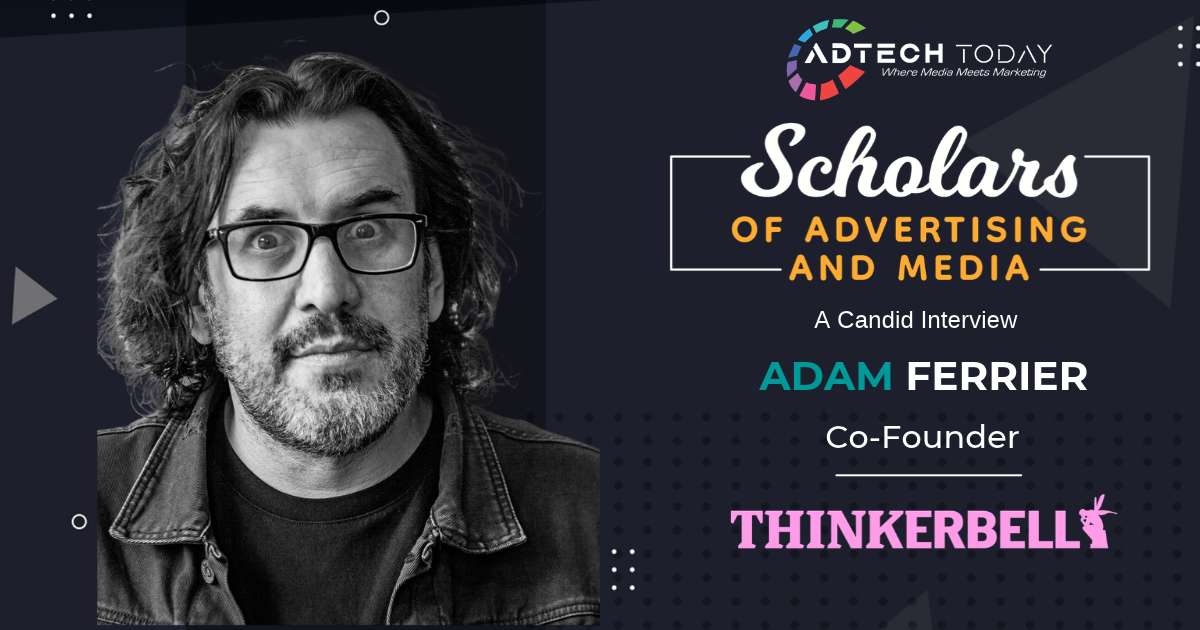
Adam Ferrier’s first lessons in behaviour change came in maximum-security prisons, not advertising agencies. Today he is the co-founder of Thinkerbell, an independent creative company that practises Measured Magic, shorthand for “marketing science meets hardcore creativity”. With offices in Sydney (North), Melbourne (South) and Auckland (East), Thinkerbell has most recently been named Mumbrella’s 2026 Full-Service Agency of the Year and placed third in Campaign UK’s 2024 Global Agency of the Year rankings.
Earlier, Ferrier was a strategic planner at Saatchi & Saatchi and co-founded Naked Communications in Asia-Pacific. He has also written two books on changing behaviour and building brands.
In this exclusive conversation, Ferrier explains why more persuasion so rarely changes what people buy, and what brands need as consumers go “full cyborg”. The difference, he says, can be as small as asking an assistant for “boots” or for “a pair of Blundstones”.
You began your career as a psychologist working in maximum-security prisons before moving into advertising. What did that experience teach you about why people change their behaviour?
“One of psychology’s biggest lessons is that understanding why you do something doesn’t necessarily help you stop doing it.”
We all know people who understand their own problems well and keep doing the same things. Most of us are those people.
Working in prisons makes the importance of environment pretty obvious. Behaviour happens in a context: who you’re surrounded by, what gets rewarded, what’s easy and what’s available all matter. You can’t just give someone a better argument and expect everything else to sort itself out.
Advertising often makes the same mistake. We assume people haven’t bought something because we failed to explain it persuasively enough. Sometimes they already like the brand. They just can’t find it, can’t afford it, or buy something else out of habit. We’re all just trying to get by, and more information rarely helps us make better decisions. It’s far more complex than that.
I’m interested in what we actually want someone to do, and what would make that more likely. That might mean changing their mind. It might also mean changing the situation. You need to be open to both.
As AI makes producing campaign assets cheaper, where should businesses put more of their creative effort: in the product, the customer experience, or the behaviour surrounding the purchase?
Wherever there’s the biggest opportunity to change behaviour. I wouldn’t decide that based on which department owns the problem.
For a long time, the advertising industry has treated creativity as something that happens after the important business decisions are made. Here’s the product, the price and how we’ll sell it. Now make us an interesting ad. Our industry has accepted a tiny role for something as powerful as creativity.
AI should give us a chance to expand that role. If making assets becomes cheaper and faster, we can spend more effort asking whether we’re making the right thing in the first place.
“Our industry has accepted a tiny role for something as powerful as creativity.”
Could the product itself generate attention? Could buying it be more interesting, or customers help create it? Even the packaging could become the media. It isn’t only an AI answer, but AI is kind of everything now, which makes it easier to bring creativity to the whole customer experience.
Marketing science can show what has worked before. When does relying on that evidence make a brand less likely to create something people have never seen before?
I don’t have a good answer to this, unfortunately. If every idea has to arrive with proof that something similar has worked before, we’re stuffed. But each idea does need a framework that explains why we think it will work. We extrapolate from what marketing and behavioural science tell us might happen, and guess a bit around the edges.
None of this means abandoning marketing science. Quite the opposite. At Thinkerbell we talk about measured magic: marketing science meets hardcore creativity. Understanding how brands grow should give you more confidence to take a creative leap.
The problem is confusing a general principle with a specific execution. Knowing that brands need to be noticed and remembered tells you something useful. It doesn’t tell you what your next idea should look like, and the science isn’t a straitjacket either.
It just gives you stronger foundations to do something interesting, and more belief that it will probably work. Marketing and behavioural science also help nervous companies act, and make those actions better informed and therefore likely to be more effective.
If AI becomes part of how people discover and choose brands, what will make a brand memorable when the assistant is doing more of the comparing?
I think being a brand people ask for becomes more valuable. So does validation from consumers, third parties and just other humans. There’s a big difference between “find me some boots” and “find me a pair of Blundstones”. In the second case, the brand has already done a fair bit of the work before the assistant gets involved.
AI may take on more of the comparing, but people will still bring their preferences, memories and social influences into the conversation. We don’t suddenly stop wanting things because a machine can compare their specifications.
“We don’t suddenly stop wanting things because a machine can compare their specifications.”
So brands need to work on both sides. Make your product information clear and accessible, and make sure there’s something about you that people actually want.
Businesses keep favouring short-term media results even when they know long-term brand building pays off. What does behavioural science say about why that habit is so hard to break?
We all respond better to the short term, including people inside organisations. That’s completely understandable. And if you make something work quickly, it has a better chance of working in the longer term too. If anyone says ‘this is a slow burn’ it just means it’s not working!
I’m a fan of getting things to work quickly or not at all. Mopping up current demand in an on-brand way is a good place to start. The long game is using that activity to build associations around category entry points, with a brand that’s easy to recognise.
“If anyone says ‘this is a slow burn’ it just means it’s not working!”
We’re drawn to immediate rewards and clear feedback. A dashboard that changes every morning is very satisfying: you do something, watch a number move and feel useful. Whether that number tells you enough about the business is another question. It’s how I keep my step count up, and it’s how brands grow (like it or not).
Looking toward 2027, which emerging shift in consumer behaviour creates the biggest opportunity for brands?
We’re going full cyborg, and now think in three systems: 1, 2 and 3. With the unlimited processing power of System 3, which is AI, we can assess brands far better and make more satisfying decisions.
That creates an interesting opportunity. People may happily delegate comparing electricity plans, but still want to spend an unreasonable amount of time choosing a pair of shoes. What gets handed over to System 3 and what people stay involved in will vary enormously by person and by category.
“My advice for brands is to try to understand how your category works now that people’s brains are part organic, part silicon, and kind of interconnected too.”
You won’t get it right straight away, but start experimenting.
Related reading: Tim Armstrong: Most Transformations Fail on People, Not Technology