
Published on: June 4, 2026
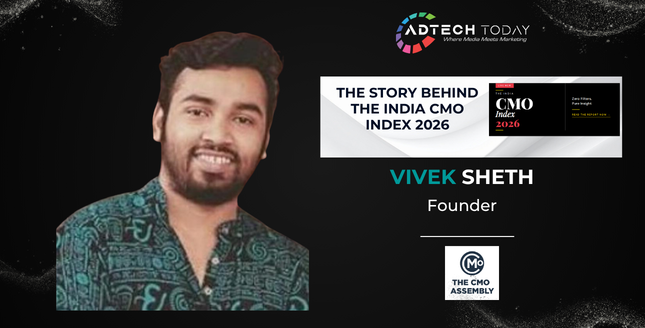
Vivek Sheth has spent fifteen years navigating the marketing world. As the founder of CMO Assembly, he knows that polished reports often hide the real struggle. He is a big believer in using AI to handle the boring stuff; he wants to free up time for the “human magic” that actually builds brands. Here is Vivek on why the industry needs to get a little more honest.
Most industry reports tell the story brands want told. What made you want to build something different?
I think I just got tired of reading reports where everything sounded too sorted; it felt like every company was confident and every marketer had already figured everything out. But the conversations I was hearing privately felt very different. Through my years in the field and now through The CMO Assembly, I’ve been lucky to spend time with marketers in settings where there is no pressure to sound impressive. People are far more honest there.
They talk about the real pressure; they talk about budgets getting questioned every single quarter and the nagging feeling of not fully trusting measurement. There is this constant struggle of trying to do meaningful brand work while being pushed toward short-term outcomes.
“At some point I just felt; why are we only documenting the polished version of this industry?”
That was the real starting point for the India CMO Index. The idea was simple; we wanted to ask honest questions, keep the responses anonymous, and publish what people actually said, even when it felt a little uncomfortable.
From concept to 121 responses — what did building this index actually look like behind the scenes?
Honestly, the process looked very human. While the community launched publicly only recently, many of these relationships and conversations existed long before The CMO Assembly even had a name; this wasn’t a project built through cold outreach or blasting survey links into the void.
“It was built through one-on-one conversations, follow-ups, WhatsApp messages, and a genuine trust in the intent behind the work. I think that part mattered a lot.”
CMOs are asked to participate in things all the time; I believe many people opened up here specifically because they knew this wasn’t being built for headlines or industry optics. I also spent a lot of time worrying about the tone of the final report. Even during the editing phase, I kept asking myself if the text still sounded like a real person said it. I remember one CMO messaging me after submitting their response, saying, “I probably wouldn’t have said some of this publicly.” That was the moment I realized we had hit a nerve; people were finally answering with a level of honesty you rarely see in this business.
Read more: India CMO Index 2026: The Report That Asked What No One Usually Does
When the responses came in, was there anything that genuinely surprised you — or made you pause before publishing?
Yes, what genuinely surprised me was how similar the emotions felt across vastly different industries. You’d read a response from someone in BFSI, then retail, then D2C, and then FMCG; underneath it all, the exact same concerns kept surfacing. There is this relentless pressure to prove ROI constantly; there is a visible difficulty in thinking long-term and a general, underlying confusion around measurement.
Everyone is trying to balance brand and performance without feeling forced to pick a side. Many CMOs spoke passionately about the need for long-term brand building, yet when the pressure mounts, performance still becomes the default safety net everyone falls back on. That gap showed up again and again. There were certainly responses where I paused for a second because they felt very personal; they weren’t dramatic, just unusually honest for an industry report.
“But I think if you remove those parts, the report loses what makes it real.”
If we aren’t willing to look at the parts that make us uncomfortable, we aren’t really learning anything new.
The CMO Assembly is built on closed-door conversation. How did that community trust shape the kind of honesty this index captured?
Trust shaped everything. I genuinely don’t think people answer this way unless a deep layer of trust already exists between the speaker and the platform. From the beginning, The CMO Assembly was never meant to be just another networking community where people exchange cards and walk away; the real vision was to create a space where CMOs didn’t feel the pressure to constantly sound certain. In this industry, we often feel like we have to have the perfect answer, but the reality is often quite different.
“Because honestly, a lot of people are still figuring things out in real time.”
Once people realize they won’t be judged for being in that “figuring it out” phase, the quality of the conversation changes completely; you see them finally drop the corporate armor. People stop sounding media-trained and start sounding human. While the anonymity of the index definitely helped lower the barriers, the true honesty came from a foundation that was built much earlier. People trusted the space before the report ever existed; they knew the intent was to listen rather than to exploit their daily challenges for a catchy headline.
This is Edition 01 and the baseline is now set. What are you watching most closely between now and 2027?
I’m mainly curious about whether the industry actually changes faster than the pressure surrounding it. One thing became very clear while building this report; most CMOs already know exactly what good marketing looks like.
“The harder part is finding enough space to actually do it consistently.”
I’m watching three specific things as we move toward 2027. First, I want to see whether AI genuinely becomes part of how teams work day-to-day; we need it to move beyond the experimentation stage and become the engine that frees people up for more creative work. Second, I’m watching whether long-term brand building survives another year of quarterly pressure and constant ROI conversations. Finally, I’m looking at confidence. That was one of the most interesting revelations in the report for me; CMOs clearly have more influence today than they did a few years ago, yet many still don’t fully feel supported by the systems around them. I am very curious to see whether that gap between influence and actual institutional support becomes smaller or even bigger by 2027.

