
Published on: May 23, 2026
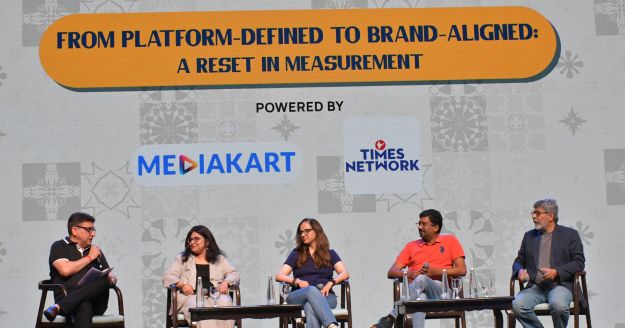
As digital advertising faces increasing scrutiny over transparency, a critical panel at Goafest 2026 tackled the future of campaign validation. Titled ‘From Platform-Defined to Brand-Aligned: A Reset in Measurement,’ the session brought together Aditi Mishra (CEO, Lodestar), Dhiraj Gupta (CTO, mFilterIt), Neha Markanda (CBO, ShareChat), and Shahad Anand (Business Head, Mediakart).
Moderated by Ashish Sehgal (CEO, Times TV Network), the discussion called for a move toward independent, third-party verification to ensure advertiser confidence.
Dhiraj Gupta delivered a strong stance on the need for independent measurement, stating definitively that “the maker cannot be the checker and the checker cannot be the maker.” He argued that platforms marking their own performance creates a conflict of interest and urged advertisers to seek third-party proof of audience quality. In a world where advertisers often never see their own targeted ads, Gupta noted that transparent measurement is now a non-negotiable requirement for shareholder value.
Read more: Trust Over Traffic: Why Relevance is the New Reach in the Attention Economy
Aditi Mishra reminded the audience that while data is essential, “consumers ultimately buy products, not algorithms.” She cautioned brands against relying solely on platform metrics, which are often designed to grow the platform rather than the brand. Mishra advocated for a balance of data and instinct, noting that long-term business growth requires moving beyond short-term optimization toward emotional consumer connection and contextual relevance.
Neha Markanda introduced the concept of “User Truth” vs. “Brand Truth.” She argued that user truth is reflected in active participation and engagement, while brand truth is found in actual sales and traffic. Markanda urged brands to move beyond simple demographic targeting and focus on cultural relevance, suggesting that measurement frameworks must account for the nuances of regional languages and platform-specific cultures.
Shahad Anand rounded out the discussion by noting that measurement should be a tool to achieve business objectives, not the objective itself. He emphasized the necessity of independent tracking to ensure transparency in how advertiser money is utilized. For Anand, the focus should remain on whether a campaign drives actual behavioral or perception change, noting that every piece of content today carries the potential for monetization.
Read more: Bravery, ‘Bharat’ and the ABBYs: The Final Word from Goafest 2026

