
Published on: May 21, 2026
Growth Potential: TV penetration is growing at 6% annually; 100 million more TV homes are expected by 2028.
The Power of Trust: TV remains the primary medium for unskippable storytelling and community viewing.
Broadcaster Evolution: Success now depends on interactive content and social amplification (moving from passive to participative).
Brand Safety: Credible TV platforms offer a safer environment for brands compared to the volatility of influencer marketing and cancel culture.
Integrated Strategy: The consensus is no longer “either-or”; TV and digital together drive the deepest content consumption.
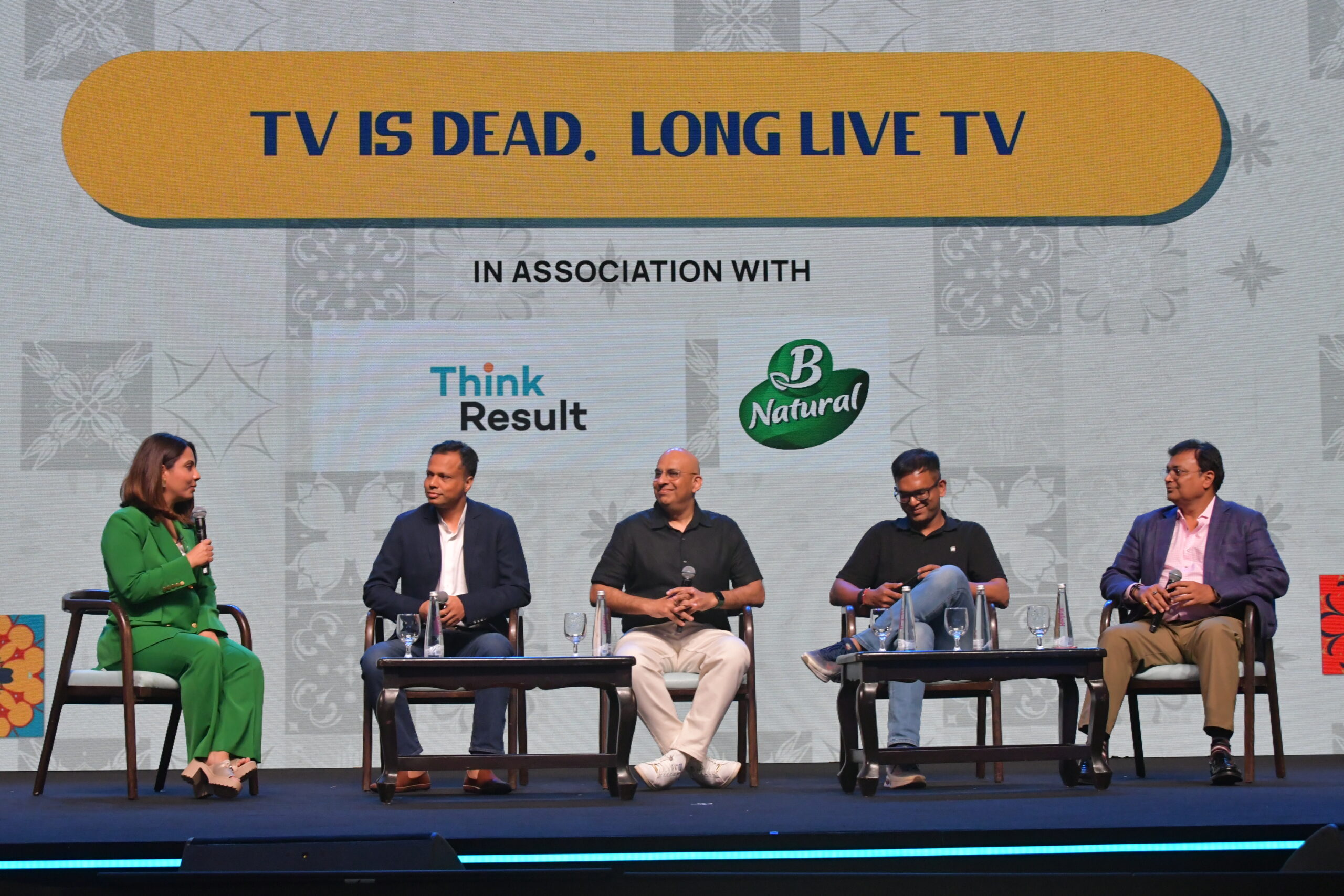
On Day 2 of Goafest 2026, a high-impact panel titled ‘TV Is Dead. Long Live TV—Resetting the Role of Television in the Age of Fragmentation’ addressed the evolving identity of India’s most traditional medium. Moderated by Tamanna Inamdar (Managing Editor, NDTV Profit), the discussion featured Akshay Agarwal (Sony Pictures Network India), Rajiv Dubey (Dabur India Limited), Arpan Biswas (Ajio), and Avinash Pandey (Secretary General, IBDF).
The session opened with a definitive look at the numbers. Television in India still reaches nearly 900 million viewers across 190 million TV homes. Far from declining, TV penetration is growing at nearly 6% annually and is expected to add over 100 million more TV homes by 2028. The panel observed that “television is not dead, only the mode of signal delivery has changed,” noting that TV remains the strongest medium for mass reach, community viewing, and unskippable storytelling.
Akshay Agarwal highlighted that broadcasters must evolve from providing passive reach to fostering participative engagement. Citing the success of shows like Indian Idol and KBC, he noted that audiences now vote, engage socially, and use second screens.
Agarwal argued that the industry conversation must shift from GRPs and reach toward ROI, attribution, and business outcomes. His vision for future TV strategy includes interactive content, social amplification, and brand moments integrated within content. He concluded by stating: “It is not TV versus digital, it is TV and digital.”
Rajiv Dubey shared that Southern markets and several Indian states still maintain over 80–90% TV penetration. While Free-To-Air TV and Connected TV are growing rapidly, he noted that brands today require an integrated media mix including television, celebrities, and influencers.
However, Dubey raised concerns regarding the influencer ecosystem, citing brand safety risks, reputation volatility, and cancel culture concerns. He stated that credible platforms remain safer for brands compared to unpredictable influencer environments, noting that emotional brand building cannot happen purely through algorithms.
Arpan Biswas observed that for e-commerce brands like Ajio, the brand is defined by the actual platform experience, including the search experience, delivery, user interface, and customer journey. He argued that television is fundamentally a distribution channel, similar to digital platforms, and the same content can travel across TV, Meta, YouTube, and OTTs depending on the strategy.
Biswas suggested that spends are shifting toward consumer experience and performance-driven ecosystems, and the real focus should remain on content effectiveness rather than platform comparisons.
Read more: All About Ads: Swiggy, NDTV, and Industry Leaders Debate ‘The Hook’ at Goafest 2026

