
Published on: March 16, 2026
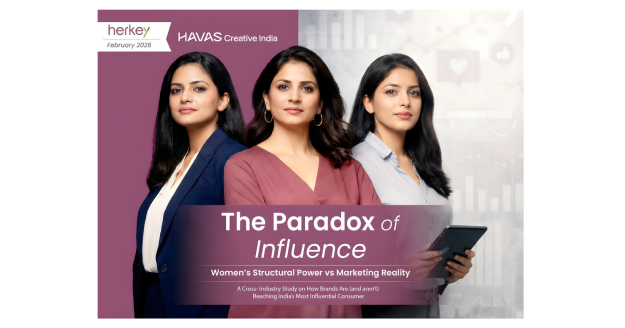
Women influence 70–85% of purchase decisions across consumer categories in India, yet most brands are still navigating how to engage them strategically. This is one of the key findings from “The Paradox of Influence: Women’s Structural Power vs Marketing Reality,” a new cross-industry report released by HerKey, in association with Havas Creative India, the creative agency of Havas India.
HerKey is an AI-powered career engagement platform in India designed specifically to unlock women’s work-life aspirations and help them start, restart, and rise in their careers. The study examines how brands across sectors are responding to the growing economic and cultural influence of women consumers in India.
The report draws on insights from marketing leaders across industries including FMCG, retail, fashion, BFSI, healthcare, auto, and personal care, combining survey data, in-depth interviews, and secondary research to understand how women-centric marketing is evolving in 2026.
Despite women influencing a significant majority of purchasing decisions across categories, the findings reveal a persistent gap between recognition and action when it comes to engaging women meaningfully through marketing and brand strategy.
Key Findings from the Report
Women influence the majority of consumer decisions
Women influence 70–85% of purchase decisions across consumer categories in India, reinforcing their position as a central economic force rather than a niche segment.
Recognition of women’s influence is rising, but strategic commitment lags
While 79% of marketers say women’s influence has grown in the last two years, only 14% consider themselves leaders in women-centric marketing, suggesting that many organisations acknowledge the opportunity but have yet to fully operationalise it.
Marketing and investment lags influence
In categories historically associated with women such as fashion, personal care, FMCG and retail, only 50–70% run regular women-focused campaigns. In sectors like auto, BFSI, and real estate, where women’s influence is rising rapidly, marketing strategies remain largely experimental or occasional.
Insight gaps, not budgets, are the biggest barrier
The study finds that the primary constraint to effective women-focused marketing is an insufficient understanding of women consumers, with legacy assumptions, data gaps, and lack of qualitative insights limiting progress.
Stereotypes persist; evolution is incremental
Nearly a third of brands still portray women primarily as caregivers. While this is widely acknowledged as limiting, “measurement challenges” and the tension between empowerment and realism reveal a continued reliance on tried and tested narratives.
Brands are shifting from reach to relationships
Looking ahead, marketers are prioritising community-led ecosystems (43%), followed by AI-driven personalisation (39%) and regional relevance (37%), signalling a move toward deeper engagement rather than mass broadcast approaches.
A Strategic Opportunity for Brands: The report highlights that while women’s influence is widely recognised, brands often fall into what the study describes as the ‘occasion trap,’ focusing on symbolic moments such as Women’s Day or Mother’s Day rather than sustained engagement throughout the year.
This gap between women’s structural power as consumers and the way brands currently market to them represents a significant opportunity for organisations willing to invest in deeper insight, more authentic storytelling, and sustained strategic commitment.
Neha Bagaria, Founder & CEO, HerKey said, “Women already influence the majority of purchase decisions across categories, yet the way brands engage with them has not evolved at the same pace. Our study with Havas Creative India highlights a critical gap. While women are widely recognised as powerful consumers, that recognition rarely translates into core business strategy. Truly understanding women requires moving beyond surface assumptions to the motivations and realities that shape their choices. For brands willing to invest in that depth of insight, the opportunity is not just better marketing, but meaningful and sustained growth.”
Anupama Ramaswamy, MD & Chief Creative Officer, Havas Creative India said, “Women are not just an audience segment anymore; they are a decisive force shaping how categories evolve. But recognition alone isn’t enough. Brands need to build deeper understanding and stronger cultural connection. At Havas, our philosophy of growth, powered by desire is rooted in the belief that brands grow when they tap into real human motivations. This study with HerKey is intended to help marketers rethink how they engage women, not as a moment or message, but as a strategic driver of growth.”
Methodology
The report combines quantitative and qualitative research to provide a comprehensive view of women-centric marketing in India. A survey was conducted among senior marketing leaders including CMOs, VPs of Marketing, Digital Marketing Heads, Brand Managers, CEOs and Category Leads across industries such as FMCG, fashion, BFSI, healthcare, retail, personal care, auto and F&B. The survey, supplemented by in-depth interviews with marketing leaders and secondary analysis of campaigns, industry reports and published research, enables a nuanced, multi-layered understanding of how brands are engaging with women consumers today and what limits them.

