
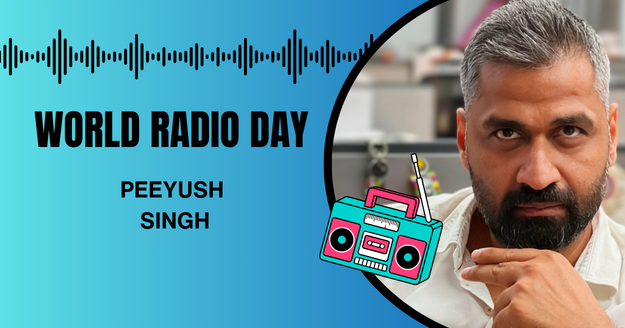
On World Radio Day, the easiest thing to do is nostalgia. To talk about antennas, frequencies and a time when the dial ruled attention. The harder, more honest thing is to look at what audio has actually become.
Every time a new platform reshapes consumption – from streaming to short video to AI-driven discovery, radio is declared irrelevant. And yet, audio as a category refuses to shrink. What’s changing is not its importance, but its architecture. Radio is no longer a place you tune into. It’s a system that lives across Live moments, on-demand behaviour, social feeds, dashboards and increasingly, communities that don’t think of themselves as listeners at all.
Streaming platforms didn’t kill radio. They forced it to confront a truth that had been postponed for too long – distribution is no longer the advantage. Ownership is.
For decades, radio’s greatest strength was direct access. It lived where people already were – in pockets, kitchens, cars, workplaces, without asking to be searched for or installed. It created daily habit before daily active users was a metric. When smartphones arrived, media reorganised itself around that device almost overnight. News became alerts. Video became vertical. Social became reflexive. Everyone chased what radio had historically owned – a direct, repeat relationship with the consumer.
Radio, ironically, was left out of the very device that inherited its role.
The absence of radio as a native, default experience on smartphones didn’t erase listening overnight, but it quietly weakened habit at the exact moment when habit became the most valuable currency in media. While platforms built identity layers, feedback loops and personalised discovery, radio remained structurally tied to legacy distribution even as consumption fractured. Audio didn’t lose relevance – radio lost default presence.
What streaming did next was not revolutionary in content, but decisive in design. It restored portability through software. It trained audiences to expect continuity across devices and moments. In doing so, it revealed something radio had always understood intuitively – people don’t return because content exists. They return because expectation exists. Something familiar, useful or identity-affirming awaits them.
That is where radio’s legacy quietly becomes its future.
For years, radio trained audiences to show up at the same time, trust the same voices and participate in shared cultural moments without effort or choice. Algorithms optimise for the individual. Radio, at its best, synchronises the collective. And in a fragmented attention economy, that distinction matters more than ever.
This is why the most resilient audio brands today are not defined by frequencies or even by apps, but by formats that people recognise instinctively. A strong format is not a show, it is a contract. It tells the audience what kind of thinking, energy or utility they can expect, and it tells advertisers what kind of environment they’re entering. Formats travel. They clip well. They scale without dilution. They turn attention into habit. In the algorithmic era, format is what frequency used to be.
From there, the logic inevitably leads to IP. For most of radio’s commercial history, time was the product. Sell the hour, sell the spot, repeat tomorrow. Platforms changed that equation by proving that intellectual property compounds. An audio IP today is not just a name or a time band, it is a worldview with a voice. It can live Live or on demand, on air or on screen, in studios or on stage. It can be sponsored, extended, franchised or translated. It turns effort into equity. That is why future-facing audio businesses are reorganising themselves around franchises rather than programming grids. Slots fill schedules. IP builds balance sheets.
What completes this evolution is community. Algorithms are remarkably good at predicting what one person might want next. They are far less capable of creating shared meaning. Audio, especially live and personality-led audio, still does that almost effortlessly. People don’t just listen, they belong. The mechanics have evolved. WhatsApp instead of call-ins, comments instead of SMS, ticketed experiences instead of contests but the underlying dynamic is unchanged. When audiences participate, retention stops being a KPI and starts becoming a by-product.
For brands, this shift arrives at precisely the right moment. As marketing moves away from brute-force reach and towards continuity, context and trust, audio offers something increasingly scarce – sustained attention in a credible environment. When formats are clear and IP is strong, brands don’t feel inserted – they feel integrated. The value lies not just in impressions, but in frequency without fatigue, in voice-led credibility that doesn’t need to shout. Audio stops interrupting behaviour and starts riding it.
What we are witnessing, then, is not radio trying to imitate streaming platforms. It is audio rediscovering its own leverage in a platform-shaped world. Distribution has been democratised. Algorithms have flattened access. The differentiator now is the ability to hold attention over time, to create recall without visuals and to build trust that survives shifts in format, device and consumption behaviour.
Radio’s mistake would be to chase platforms on their terms. Its opportunity is to use platforms as accelerants while reclaiming ownership of the listener relationship, especially on the devices that define daily life today. Live moments, recognisable formats, durable IP and participatory communities are not nostalgic ideas. They are competitive advantages that scale precisely because algorithms cannot manufacture them cheaply.
On World Radio Day, the story is not about survival. It is about re-architecture. From airwaves to algorithms, audio is no longer a medium confined to a dial. It is a growth engine built on human voice, shared experience and repeatable meaning. And in an economy increasingly starved of trust and continuity, that may be its most valuable asset of all.