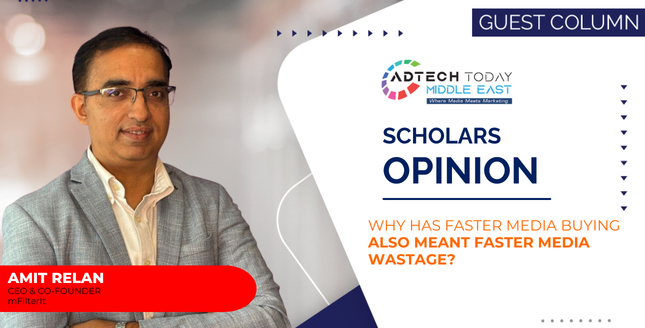
India’s advertising industry is projected to grow at a CAGR of 7.4% by 2027, reflecting how aggressively brands are competing among themselves for the most relevant space in the digital world.
The key objective is to spread brand awareness across the globe and further convert that visibility into meaningful business outcomes. No digital strategy today is complete without confronting the elephant in the room which is ad fraud. Nearly 56.1% of ads don’t reach the intended users due to ad fraud and other pipeline issues in the media supply chain.
It directly indicates that with ad fraud taking over, you are compromising on the results, well, unknowingly.
More Ads Don’t Mean More Traction, They Mean More Noise
The first thing is to acknowledge that more ads do not mean more traction, it simply means more noise if the traffic coming on your ads is barely driving any conversions. Without validating your traffic, your ads get stuck in a bubble of illusion. Here are the signs of a bot driven traffic:
The fraudulent traffic is not just limited to showing such easy to spot signs. With the ad fraud techniques maturing, the sophistication of the activities has also become human-like. Using techniques like Organic hijacking or driving incentivized traffic, the fraudsters drive traffic that looks believable and can meet hard KPIs like filling the leads, subscribing, or post install actions.
Spend Big, But Spend Smart: Why Full-Funnel Validation is the Need of the Hour
Ad fraud is evolving rapidly, and marketers need to stay ahead of these threats. A linear approach might help to identify fake clicks or installs. But fraud doesn’t move in a linear way anymore. A fake impression can lead to skewing the down the funnel metrics or an install driven by an incentive campaign can cost a higher cost of acquisition as the traffic coming is low intent and might uninstall once claiming the incentive.
Therefore, brands need to elevate their protection suite with a full-funnel validation. Some of the benefits of adopting a full-funnel approach:
Eliminate hidden waste across the journey, not just at the click — block bots, fake leads, incentivized installs, and post-conversion abuse before they quietly drain budgets.
Replace vanity metrics with real business signals — optimize for retention, revenue, and LTV instead of misleading spikes in CTRs, installs, or form fills.
Make attribution trustworthy — ensure only genuine channels and partners get credit, so budgets flow to real performers, not artificially inflated sources.
Scale with certainty, not assumptions — when every stage of the funnel is validated, every additional dollar spent has a higher probability of driving real growth.
Conclusion
Brands invest heavily on digital ads to reach their ideal audience and convert them into their users. However, in 2026 this will not be enough. They also need to see who is interacting with their ads, where their ads are seen, and if the outcomes are genuine.
Read more: Karthik Raman: From Viewability to Experience — Redefining How Brands Earn Attention

