
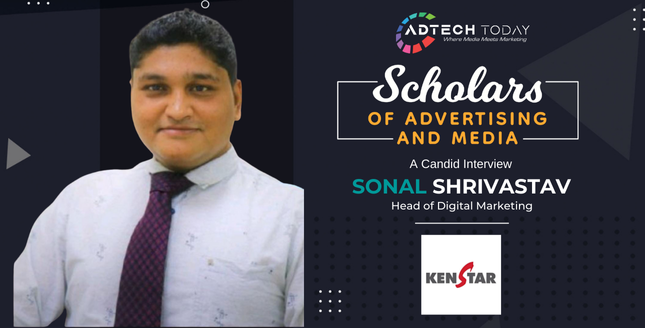
Sonal Shrivastav, Head of Digital Marketing, Kenstar, is a digital marketing leader with over a decade of experience who has built his career at the intersection of creativity, strategy, and data. He has led impactful campaigns, rebranding initiatives, and multi-channel strategies that consistently deliver measurable growth. Known for blending storytelling with analytics, Sonal shares his perspective on evolving consumer behavior, building high-performing teams, and unlocking the next wave of digital opportunities.
You’ve built a decade-long career in digital marketing, spanning SEO, e-commerce ads, social media, and more. Looking back, what key experiences shaped your evolution as a digital leader?
Reflecting on my journey, I would say a few experiences have played a defining role in shaping me as a digital leader.
Each of these experiences not only strengthened my expertise but also helped me evolve from being a practitioner to a strategist and mentor in the digital space.
Digital marketing often requires balancing analytics with storytelling. How do you personally approach this balance to ensure campaigns remain both measurable and meaningful?
Balancing analytics with storytelling is at the core of effective digital marketing. For me, the approach begins with clarity of purpose—knowing what we want the campaign to achieve and who we’re speaking to.
On one side, analytics provide precision: they help us segment, target, and optimize, ensuring we reach the right audience at the right time while measuring impact accurately. On the other, storytelling creates the human connection—it’s what makes people engage, remember, and emotionally resonate with the brand.
I usually start with the narrative, crafting a story that’s authentic to the brand and relevant to the audience. Once that’s established, analytics shape how and where the story is told, as well as measure whether it delivers the intended results.
In short, storytelling drives meaning, analytics drive efficiency, and it’s the integration of both that makes a campaign truly successful.
With your experience across platforms like Amazon, Flipkart, and Blinkit, what changes in consumer behavior have stood out to you, and how have they influenced your strategies?
On marketplaces, consumers tend to be more value-conscious and research-driven. They compare prices, read reviews, and look for credibility signals before making a purchase. On quick commerce platforms like Blinkit and Zepto, however, the behavior is driven by instant gratification and impulse buying, where speed often outweighs price sensitivity.
These shifts have influenced my strategies in two ways:
In essence, these behavioral changes have reinforced the importance of platform-first strategies rather than a one-size-fits-all approach.
You’ve led teams to execute innovative campaigns and rebranding initiatives. What’s your philosophy on nurturing digital talent and building high-performing marketing teams?
Building high-performing digital teams is seen as beginning with the fostering of a culture of curiosity, collaboration, and ownership.
Digital marketing evolves so quickly that skills can become outdated in no time. That’s why I encourage my teams to keep learning, experimenting, and sharing knowledge—whether it’s exploring new platforms, testing fresh formats, or analyzing emerging trends.
Equally important is empowerment. I believe in giving team members the space to take initiative, own projects end to end, and even make mistakes, because that’s where real learning happens. At the same time, I focus on creating a supportive environment where feedback is constructive and ideas, no matter how unconventional, are welcomed.
Finally, alignment with the larger brand vision is crucial. When people see how their contributions connect to a bigger impact, it naturally fuels motivation and accountability.
In essence, my philosophy is about nurturing talent not just for tasks, but for growth—helping individuals evolve into agile, strategic thinkers who can thrive in an ever-changing digital ecosystem.
From search to e-commerce ads to social media, you’ve worked across multiple digital touchpoints. Which channel do you believe offers the most untapped potential today, and why?
While every channel carries its own strengths, quick commerce advertising is seen as holding the most untapped potential today. Platforms such as Blinkit, Zepto, and Instamart are rapidly evolving from being delivery utilities to becoming high-intent shopping destinations. Their unique strength lies in combining instant gratification with hyper-local targeting, enabling brands to influence consumers at the exact moment of purchase—a capability of immense power. At the same time, these platforms are still in the early stages of developing robust ad ecosystems, leaving space for innovative formats, sharper personalization, and a first-mover advantage for brands willing to experiment. Quick commerce is expected to become as central to digital strategy as search and social, particularly for everyday consumption categories.
The digital landscape changes rapidly with new platforms, tools, and trends. How do you stay ahead and ensure that both you and your teams keep evolving?
Staying plugged into industry updates through trend reports, webinars, and peer conversations is made a regular practice, along with experimenting firsthand with new tools to gauge their potential. Within teams, a culture is fostered where learning is integrated into the workflow. Knowledge-sharing sessions are held regularly, emerging platforms are piloted through small test campaigns, and individuals are encouraged to contribute fresh perspectives. In this way, evolution is treated not as a reactive process but as a proactive, collective habit. The emphasis remains less on chasing every new trend and more on cultivating the agility to evaluate, adapt, and apply innovations meaningfully to brand goals.

